When it comes to choosing a proxy, many difficulties appear in terminology and understanding how everything works, because there are different protocols, types, authorization methods, and other factors. Today, we will talk about Rotating, Sticky, and Static proxies, and we will also explain which option may be better.
So, Rotating, Sticky, and Static proxies aren’t proxy types, but rather a characteristic of their lifespan — meaning how long the proxy server’s IP address will remain assigned to you.
Rotating Proxies
These are proxies whose IP addresses change with each request or at a specified interval. In other words, in the settings, you can choose when the IP address on the configured port will change. Here’s an example: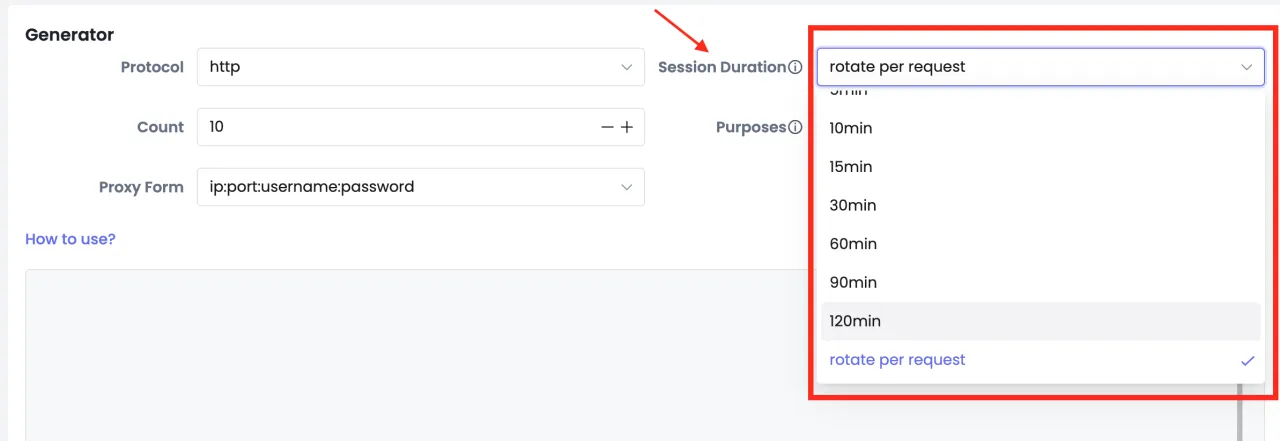
Types of rotating proxies
- Residential Rotating Proxies
- Mobile Rotating Proxies
- Datacenter Rotating Proxies
When is it best to use them?
They're best suited for situations where you need to anonymously browse or gather information from websites in order to remain undetected and avoid being blocked. Since IP addresses change frequently, rotating proxies are ideal for web scraping and account farming.
Where can I get rotating proxies?
Proxies are purchased from proxy providers. Below, you can find lists of the best providers:
- Residential rotating proxies — here
- Mobile rotating proxies — here
- Datacenter rotating proxies — here
Sticky Proxies
Sticky proxies are the same as rotating proxies but include an option to keep the IP address assigned to you for as long as possible. This is not a separate type of proxy — it’s simply a feature that allows the assigned IP address to remain active for a longer duration. Here’s what it looks like:
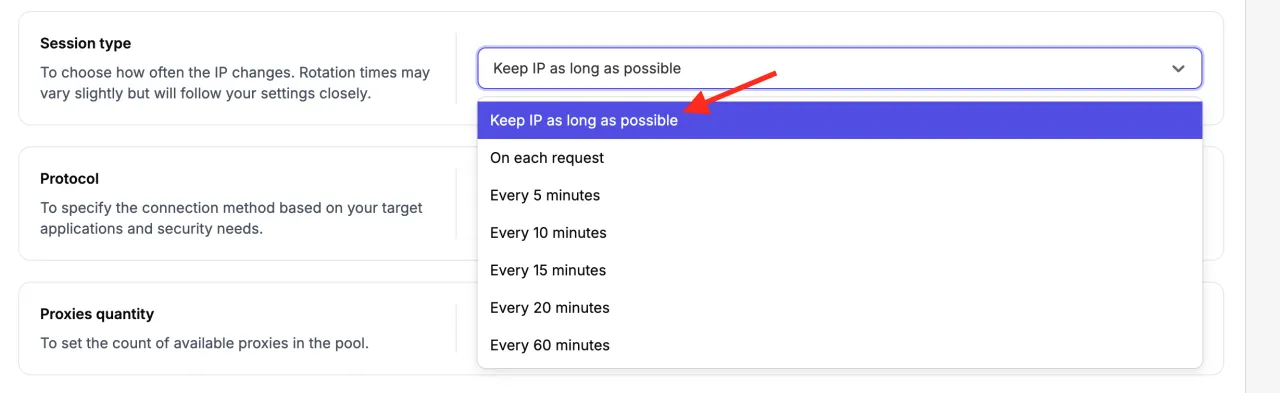 Different providers may name this feature differently, but the idea remains the same: the IP address of sticky proxies will remain active as long as possible, but not permanently (in most cases, up to 24 hours).
Types of sticky proxies
- Residential Rotating Proxies
- Mobile Rotating Proxies
When is it best to use them?
Typically, situations where you need to keep an IP address for as long as possible are connected to multi-accounting. However, the issue is that the proxies we will discuss next are better suited for this purpose. In our opinion, sticky proxies work well when daily activity is not required, because you pay for the traffic used rather than a dedicated IP address — making them more cost-effective than static proxies.
Where can I get sticky proxies?
You can get them from the same providers that offer rotating proxies, but not all providers include the sticky option. Providers that definitely offer sticky proxies include Floppydata, Proxy-Seller, and Geonix.
Static Proxies
These are proxies whose IP addresses remain permanently assigned to you (as long as the service is paid). This means that after purchase, you receive a static IP address that will not change.
Types of static proxies
- ISP Proxies
- Datacenter Proxies
When is it best to use them?
ISP proxies are ideal when you need to appear as a real individual user. They are most commonly chosen for multi-accounting, as well as by marketers and analysts. This way, you won’t appear suspicious by frequently changing your IP address, and you pay for the IP itself — not the traffic consumption.
Datacenter proxies are well-suited for automation setup, checkers, SMTP, bulk messaging, testing, and similar use cases.
Where can I get static proxies?
- The ratings of static ISP proxy providers are available — here.
- The ratings of static datacenter proxies are available — here.
You can also filter providers by payment method and country.
Conclusion
Now we’ve established that rotating proxies frequently change their IP addresses, and that sticky proxies are the same rotating proxies that retain an IP address for as long as possible. Static proxies keep the IP address assigned to you as long as the service remains active.
Which is better? There’s no definitive answer — it depends on your goals, where you plan to use them, and the frequency and scale of your activity. With so many proxy providers available today, our rating help you pick the one that’s right for you. If you have any questions, feel free to ask in the comments.