Pricing
- Rotation Residential Proxies
- Rotation Mobile Proxies
Specifications


2extract in our rankings
Proxy Type
- Mobile Proxies
- Residential Proxies
- Rotation Residential Proxies
- Rotation Mobile Proxies
Available Countries
- Ukraine
- Austria
- Belgium
- Bulgaria
- Croatia
- Czech Republic
- Denmark
- Estonia
- Finland
- France
- Germany
- Greece
- Hungary
- Ireland
- Italy
- Latvia
- Lithuania
- Netherlands
- Poland
- Portugal
- Romania
- Slovakia
- Slovenia
- Spain
- Sweden
- United Kingdom
- Australia
- United States
- Canada
- China
- India
- Saudi Arabia
- United Arab Emirates
- Israel
- Japan
- Korea
- Norway
- Thailand
- Switzerland
- Turkey
- Serbia
- Kazakhstan
- Vietnam
- Philippines
- Indonesia
- Malaysia
- Mexico
- Brazil
- Argentina
- Azerbaijan
- Algeria
- Andorra
- Armenia
- South Africa
- Bangladesh
- Belarus
- Bosnia and Herzegovina
- Vatican
- Venezuela
- Georgia
- Dominican Republic
- Egypt
- Jordan
- Iraq
- Iceland
- Cambodia
- Hong Kong
- Colombia
- Costa Rica
- Kyrgyzstan
- Luxembourg
- Moldova
- Monaco
- Nigeria
- New Zealand
- Pakistan
- Singapore
- Tajikistan
- Taiwan
- Uzbekistan
- Montenegro
- Ecuador
- Albania
- Bahamas
- Bahrain
- Bolivia
- Cameroon
- Chile
- Cuba
- Cyprus
- Ethiopia
- Guatemala
- Jamaica
- Kenya
- Lebanon
- Liberia
- Libya
- Macedonia
- Madagascar
- Maldives
- Malta
- Mongolia
- Morocco
- Nepal
- Paraguay
- Peru
- Qatar
- Ukraine
- Austria
- Belgium
- Bulgaria
- Croatia
- Czech Republic
- Denmark
- Estonia
- Finland
- France
- Germany
- Greece
- Hungary
- Ireland
- Italy
- Latvia
- Lithuania
- Netherlands
- Poland
- Portugal
- Romania
- Slovakia
- Slovenia
- Spain
- Sweden
- United Kingdom
- Australia
- United States
- Canada
- China
- India
- Saudi Arabia
- United Arab Emirates
- Israel
- Japan
- Korea
- Norway
- Thailand
- Switzerland
- Turkey
- Serbia
- Kazakhstan
- Vietnam
- Philippines
- Indonesia
- Malaysia
- Mexico
- Brazil
- Argentina
- Azerbaijan
- Algeria
- Andorra
- Armenia
- South Africa
- Bangladesh
- Belarus
- Bosnia and Herzegovina
- Vatican
- Venezuela
- Georgia
- Dominican Republic
- Egypt
- Jordan
- Iraq
- Iceland
- Cambodia
- Hong Kong
- Colombia
- Costa Rica
- Kyrgyzstan
- Luxembourg
- Moldova
- Monaco
- Nigeria
- New Zealand
- Pakistan
- Singapore
- Tajikistan
- Taiwan
- Uzbekistan
- Montenegro
- Ecuador
- Albania
- Bahamas
- Bahrain
- Bolivia
- Cameroon
- Chile
- Cuba
- Cyprus
- Ethiopia
- Guatemala
- Jamaica
- Kenya
- Lebanon
- Liberia
- Libya
- Macedonia
- Madagascar
- Maldives
- Malta
- Mongolia
- Morocco
- Nepal
- Paraguay
- Peru
- Qatar
- Seychelles
- Sri Lanka
- Tanzania
- Tunisia
- Turkmenistan
- Uruguay
- Zambia
- Afghanistan
- Angola
- Aruba
- Benin
- Bhutan
- Botswana
- Brunei Darussalam
- Burkina Faso
- Congo
- Côte d'Ivoire
- Curacao
- El Salvador
- Fiji
- Gabon
- Ghana
- Guadeloupe
- Guyana
- Honduras
- Kuwait
- Macao
- Mali
- Mauritius
- Mozambique
- Myanmar
- Namibia
- Oman
- Palau
- Palestine
- Panama
- Puerto Rico
- Réunion
- Russia
- Rwanda
- Saint Lucia
- Senegal
- Sudan
- Syria
- Timor-Leste
- Togo
- Trinidad and Tobago
- Uganda
- Yemen
- Zimbabwe
- Chad
- Djibouti
- Gambia
- Mauritania
- South Sudan
- Liechtenstein
- Belize
- British Virgin Islands
- Haiti
- Laos
- American Samoa
- Anguilla
- Antigua and Barbuda
- Barbados
- Bermuda
- Bonaire
- Burundi
- Cayman Islands
- Central African Republic
- Comoros
- Equatorial Guinea
- Eritrea
- Gibraltar
- Greenland
- Grenada
- Guinea
- Guinea-Bissau
- Iran
- Lesotho
- Malawi
- Nicaragua
- Niger
- Papua New Guinea
- Samoa
- Sierra Leone
- Solomon Islands
- Somalia
- Suriname
- Ukraine
- Austria
- Belgium
- Bulgaria
- Croatia
- Czech Republic
- Denmark
- Estonia
- Finland
- France
- Germany
- Greece
- Hungary
- Ireland
- Italy
- Latvia
- Lithuania
- Netherlands
- Poland
- Portugal
- Romania
- Slovakia
- Slovenia
- Spain
- Sweden
- United Kingdom
- Australia
- United States
- Canada
- China
- India
- Saudi Arabia
- United Arab Emirates
- Israel
- Japan
- Korea
- Norway
- Thailand
- Switzerland
- Turkey
- Serbia
- Kazakhstan
- Vietnam
- Philippines
- Indonesia
- Malaysia
- Mexico
- Brazil
- Argentina
- Azerbaijan
- Algeria
- Andorra
- Armenia
- South Africa
- Bangladesh
- Belarus
- Bosnia and Herzegovina
- Vatican
- Venezuela
- Georgia
- Dominican Republic
- Egypt
- Jordan
- Iraq
- Iceland
- Cambodia
- Hong Kong
- Colombia
- Costa Rica
- Kyrgyzstan
- Luxembourg
- Moldova
- Monaco
- Nigeria
- New Zealand
- Pakistan
- Singapore
- Tajikistan
- Taiwan
- Uzbekistan
- Montenegro
- Ecuador
- Albania
- Bahamas
- Bahrain
- Bolivia
- Cameroon
- Chile
- Cuba
- Cyprus
- Ethiopia
- Guatemala
- Jamaica
- Kenya
- Lebanon
- Liberia
- Libya
- Macedonia
- Madagascar
- Maldives
- Malta
- Mongolia
- Morocco
- Nepal
- Paraguay
- Peru
- Qatar
- Seychelles
- Sri Lanka
- Tanzania
- Tunisia
- Turkmenistan
- Uruguay
- Zambia
- Afghanistan
- Angola
- Aruba
- Benin
- Bhutan
- Botswana
- Brunei Darussalam
- Burkina Faso
- Congo
- Côte d'Ivoire
- Curacao
- El Salvador
- Fiji
- Gabon
- Ghana
- Guadeloupe
- Guyana
- Honduras
- Kuwait
- Macao
- Mali
- Mauritius
- Mozambique
- Myanmar
- Namibia
- Oman
- Palau
- Palestine
- Panama
- Puerto Rico
- Réunion
- Russia
- Rwanda
- Saint Lucia
- Senegal
- Sudan
- Syria
- Timor-Leste
- Togo
- Trinidad and Tobago
- Uganda
- Yemen
- Zimbabwe
- Chad
- Djibouti
- Gambia
- Mauritania
- South Sudan
- Liechtenstein
- Belize
- British Virgin Islands
- Haiti
- Laos
- American Samoa
- Anguilla
- Antigua and Barbuda
- Barbados
- Bermuda
- Bonaire
- Burundi
- Cayman Islands
- Central African Republic
- Comoros
- Equatorial Guinea
- Eritrea
- Gibraltar
- Greenland
- Grenada
- Guinea
- Guinea-Bissau
- Iran
- Lesotho
- Malawi
- Nicaragua
- Niger
- Papua New Guinea
- Samoa
- Sierra Leone
- Solomon Islands
- Somalia
- Suriname
- Ukraine
- Austria
- Belgium
- Bulgaria
- Croatia
- Czech Republic
- Denmark
- Estonia
- Finland
- France
- Germany
- Greece
- Hungary
- Ireland
- Italy
- Latvia
- Lithuania
- Netherlands
- Poland
- Portugal
- Romania
- Slovakia
- Slovenia
- Spain
- Sweden
- United Kingdom
- Australia
- United States
- Canada
- China
- India
- Saudi Arabia
- United Arab Emirates
- Israel
- Japan
- Korea
- Norway
- Thailand
- Switzerland
- Turkey
- Serbia
- Kazakhstan
- Vietnam
- Philippines
- Indonesia
- Malaysia
- Mexico
- Brazil
- Argentina
- Azerbaijan
- Algeria
- Andorra
- Armenia
- South Africa
- Bangladesh
- Belarus
- Bosnia and Herzegovina
- Vatican
- Venezuela
- Georgia
- Dominican Republic
- Egypt
- Jordan
- Iraq
- Iceland
- Cambodia
- Hong Kong
- Colombia
- Costa Rica
- Kyrgyzstan
- Luxembourg
- Moldova
- Monaco
- Nigeria
- New Zealand
- Pakistan
- Singapore
- Tajikistan
- Taiwan
- Uzbekistan
- Montenegro
- Ecuador
- Albania
- Bahamas
- Bahrain
- Bolivia
- Cameroon
- Chile
- Cuba
- Cyprus
- Ethiopia
- Guatemala
- Jamaica
- Kenya
- Lebanon
- Liberia
- Libya
- Macedonia
- Madagascar
- Maldives
- Malta
- Mongolia
- Morocco
- Nepal
- Paraguay
- Peru
- Qatar
Interface Language
- English
Payment Methods
 AliPay
 Visa/Mastercard
Top 9 alternatives for 2extract







Our Review

Last updated: 2026-08-19
2extract is a residential proxy provider with a developer-first focus and a straightforward pay-as-you-go pricing model. The company runs a pool of over 10 million ethically sourced desktop IPs, and it targets developers and growth engineers who are tired of bloated dashboards and unpredictable billing. In plain terms: you deposit funds, you pay $3.99 per gigabyte, and you use what you need. No monthly commitment, no extra charges for concurrency.
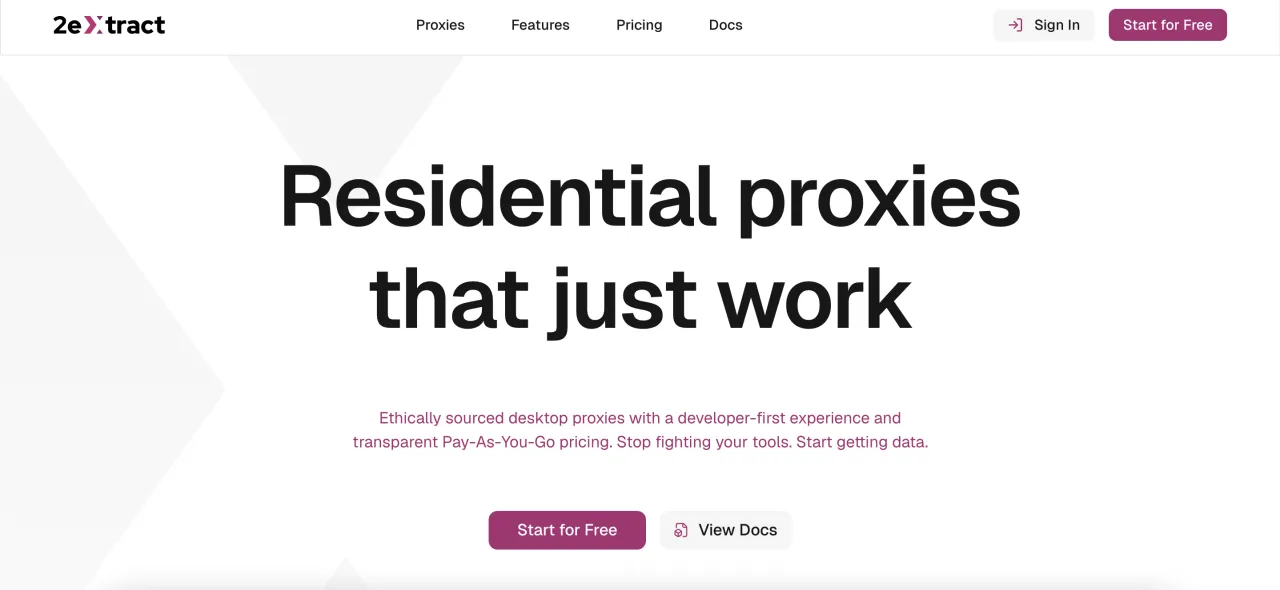
The pitch is simple enough, but simplicity is harder to deliver than it sounds in this industry. A lot of providers claim a clean, developer-friendly experience and then bury you in a support ticket queue the first time something breaks. Whether 2extract actually lives up to that reputation is what this review covers.
The Proxy Network
The 10 million IP pool is made up of real desktop devices whose owners have opted in voluntarily, typically in exchange for an ad-free experience or premium features in an app. That is the standard consent-based model you see from the better-regarded residential providers, and it matters for two practical reasons. First, IPs that were acquired through explicit consent tend to have cleaner reputations with anti-bot systems, because those devices generate real browsing traffic outside your sessions. Second, it insulates you somewhat from the compliance risk that comes with networks built on hijacked or hijacked-adjacent supply.
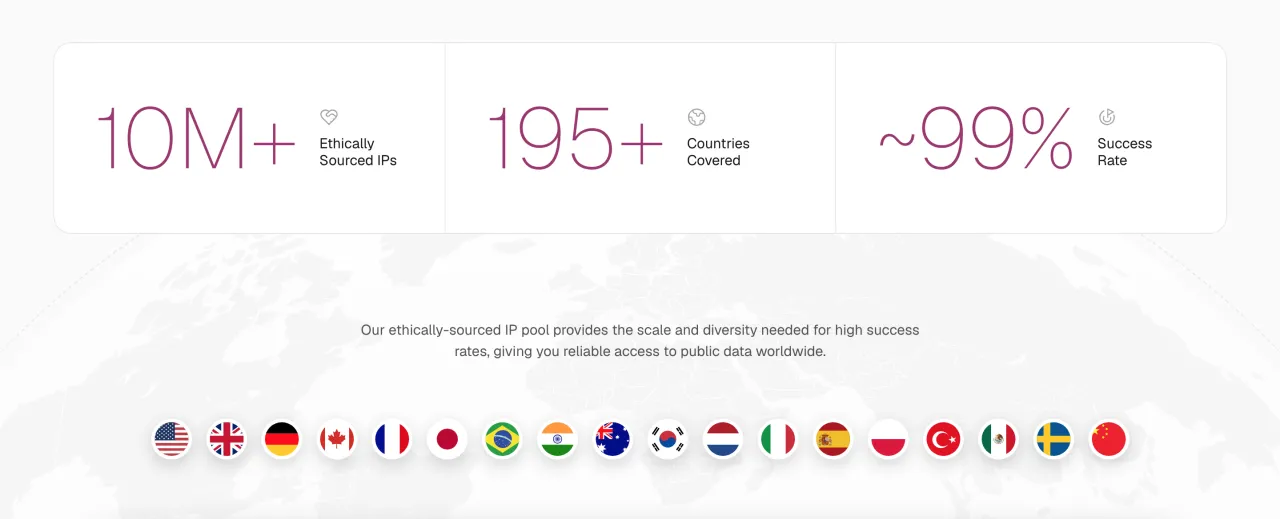
City-level and ASN-level targeting is available, which means you can point requests at a specific metro area rather than just a country. That level of precision matters for local SEO checks, price monitoring for geo-locked e-commerce, and ad verification where the ad buyer cares about a specific city. The reported success rate sits at approximately 99%, which 2extract publishes on its homepage. That figure is self-reported, so treat it as a baseline expectation rather than a guaranteed floor.
Both HTTP/HTTPS and SOCKS5 protocols are supported. HTTP/HTTPS is the default choice for most scraping scripts. SOCKS5 is the one you want for anti-detect browser sessions or any workflow where you need transport-level tunneling without the proxy modifying request headers. The fact that 2extract explicitly calls out no header modification on the SOCKS5 side is worth noting, because some residential providers silently inject identifying headers that can undermine your browser fingerprint setup.
Pricing
The pricing structure is about as simple as it gets in this market. There is one standard plan at $3.99 per gigabyte. You start with a minimum deposit of $10, and traffic is deducted as you use it. There are no seat fees, no concurrency caps, and no charges for accessing features like city targeting or session control.
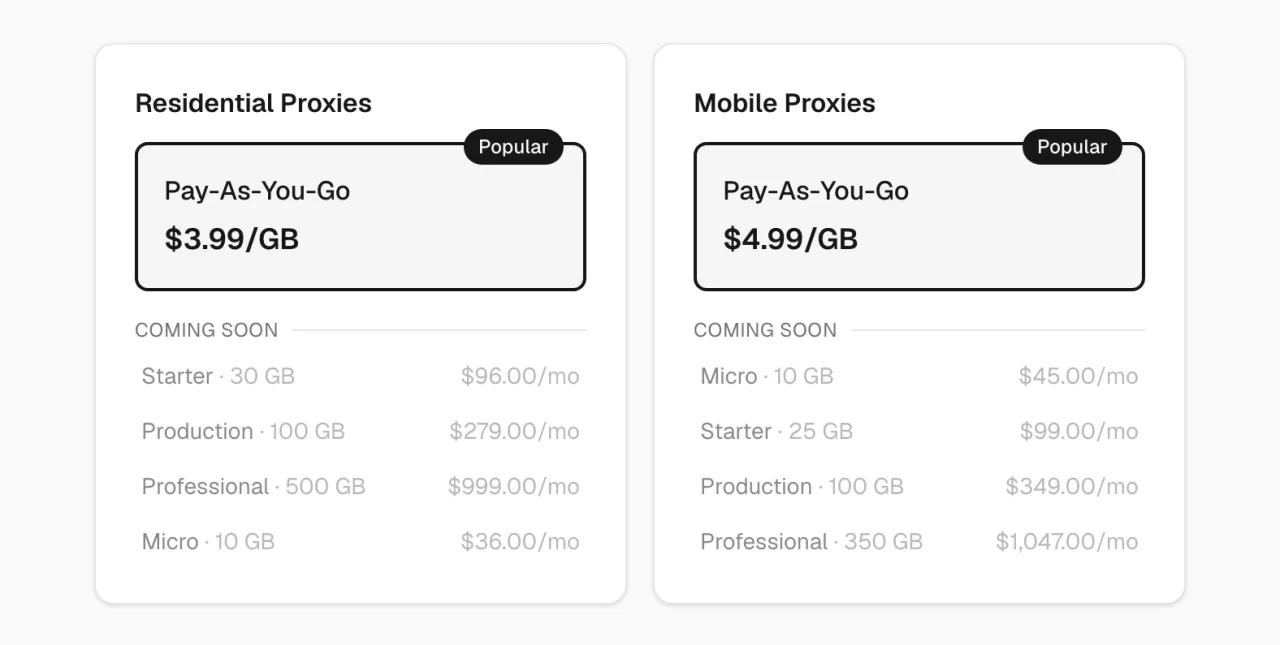
For context, the residential proxy market in 2026 runs roughly $0.49 per GB on the very high-volume end up to about $8 per GB for small pay-as-you-go plans. At $3.99 per GB with no minimum monthly commitment, 2extract sits in the middle range. That is not the cheapest option in absolute terms, but the absence of hidden fees changes the real cost calculation. A lot of providers charge extra for concurrent connections beyond a certain threshold, or gate geo-targeting precision behind higher tiers. If you need unlimited concurrency and city-level targeting from the first gigabyte, the effective price elsewhere can climb well above $3.99.
For high-volume users, there is a custom enterprise tier with volume discounts and dedicated ports. The entry point there is 500 GB per month, with tiers going up to 2 TB, 10 TB, and 10 TB+. You submit a request through the site and a technical person gets back to you directly.
| Plan | Price per GB | Minimum | Concurrency | Commitment |
|---|---|---|---|---|
| Pay-As-You-Go | $3.99 | $10 deposit | Unlimited | None |
| Volume / Enterprise | Custom | ~500 GB/mo | Unlimited + dedicated ports | Custom |
Dashboard and Developer Experience
The dashboard is fast. That sounds like a low bar, but it is a genuine differentiator when you have used providers whose control panels take four or five seconds to respond to every click. 2extract built the interface to respond instantly, which makes it practical to monitor live usage, adjust session parameters, and check balances mid-run rather than after the fact.
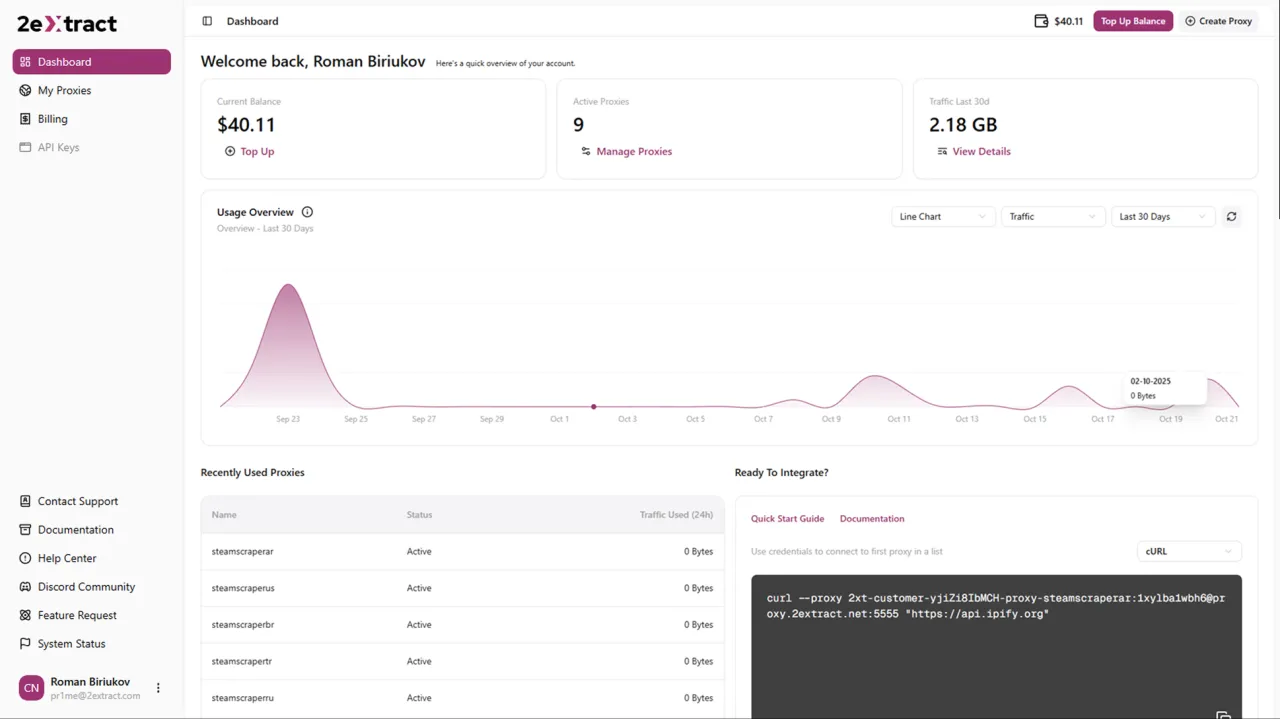
Proxy configuration happens through username parameters rather than separate API calls. You encode geo-targeting, session type, and other settings directly into the username string you pass to the proxy gateway. The gateway address is proxy.2extract.net:5555, and your username takes the format 2xt-customer-[accountID]-proxy-[name]-[params]. That approach is called dynamic gateway control, and it is genuinely useful: you can change geo or session behavior between requests without hitting a management API or restarting a connection pool. For high-throughput scrapers, that flexibility reduces the overhead of managing multiple endpoint configurations.
The full-parity API means anything you can do in the dashboard you can also do programmatically. That includes managing proxy instances, reading usage statistics, setting spending limits, and controlling balances. For teams running automated pipelines where human dashboard interaction is not practical, this matters a lot.
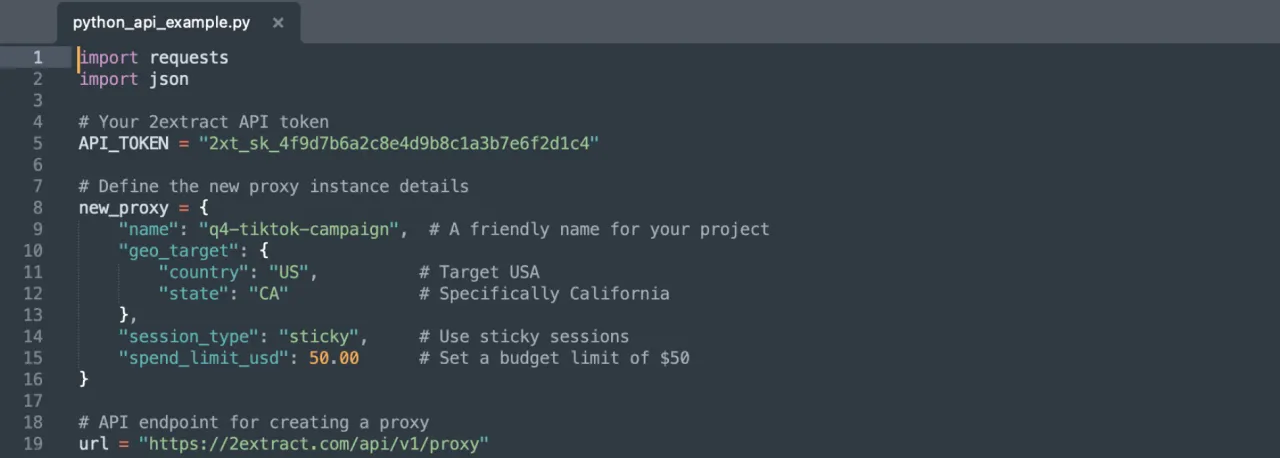
Spending limits are configurable in either gigabytes or dollars, and you can set target whitelists and authorized IP restrictions. These are security and budget controls that larger providers sometimes lock behind enterprise tiers. Having them available on the standard plan is useful for anyone running production scraping jobs where an unexpected traffic spike could drain a prepaid balance.
Session Management
Session control is flexible. You can run rotating sessions, where each request gets a fresh IP from the pool, or you can hold a sticky session on a single IP for as long as the underlying peer connection allows. Sticky sessions matter whenever you need to maintain authentication state across multiple requests to the same target, such as logging into a site and then navigating several pages while appearing to be the same user.
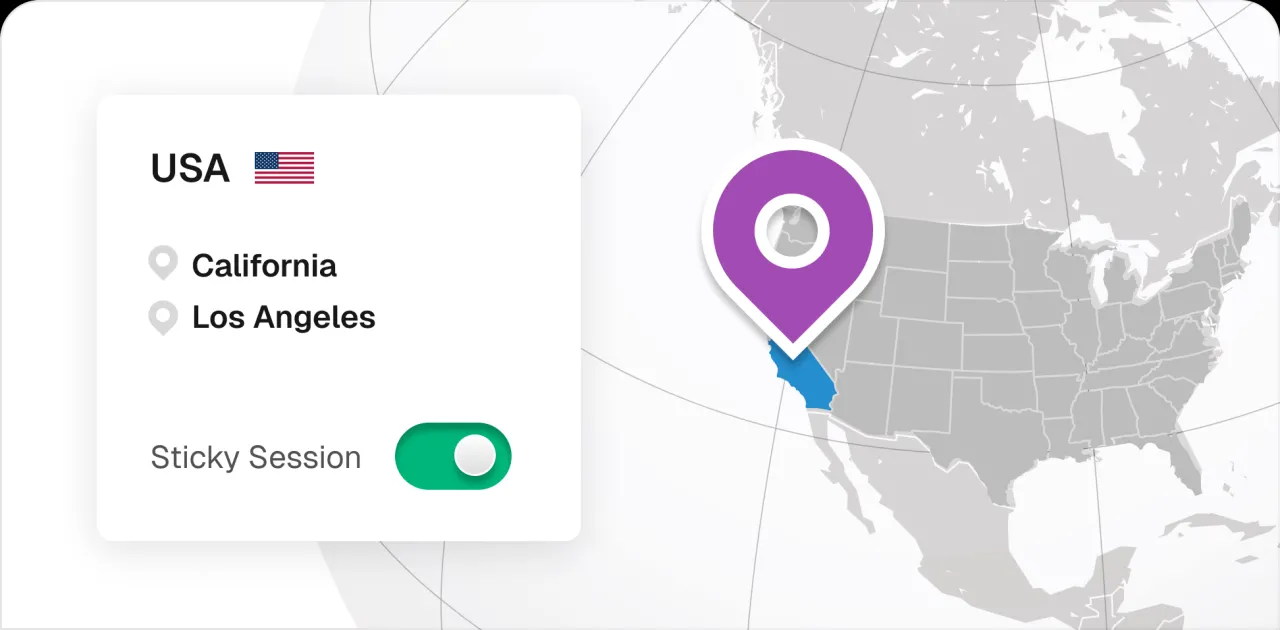
The mechanism behind residential sticky sessions is worth understanding. When you hold a session, the proxy provider maintains your connection through a single peer device. The session lasts only as long as that device stays online. Desktop residential IPs tend to hold longer sessions than mobile IPs because desktop devices are typically plugged in and continuously connected, whereas mobile devices drop off networks frequently. 2extract positions itself specifically as a desktop residential provider, which is a reasonable choice if your primary need is stable medium-length sessions rather than mobile carrier IPs for mobile-targeted targets.
What 2extract Does Well
The pay-as-you-go model with no concurrency fees is the single biggest practical advantage for developers who do not have predictable monthly traffic. Most residential providers charge either a flat monthly fee for a bandwidth bucket or a per-GB rate that gets punitive if you exceed the plan. Running out of bandwidth mid-month and having to upgrade a plan is a real workflow disruption. With 2extract, you top up the balance and continue.
The direct-to-engineer support model is also genuinely different from what most mid-tier providers offer. Getting a technical answer from a person who actually built the product is faster and more useful than working through a first-level support agent reading from a script. For developers debugging an unusual proxy behavior or a specific anti-bot interaction, that matters.
The ethical sourcing commitment is backed by a specific compliance structure: a consent-based peer network, GDPR and CCPA compliance, active botnet monitoring, and a strict acceptable use policy with vetting at onboarding. These are not just marketing statements; they are policies with operational consequences, like the fact that 2extract enforces an AUP that restricts certain use cases rather than allowing anything a customer wants to pay for.
Limitations Worth Knowing
At $3.99 per GB, 2extract is not the cheapest residential option in the market. Providers offering six-figure IP pools at sub-$2 per GB exist, though they typically require volume commitments and come with more complex dashboards. If your monthly traffic is reliably above 500 GB and cost per GB is your primary decision criterion, the enterprise tier negotiation is worth pursuing before committing to the standard rate.
The pool of 10 million IPs is a solid number for most use cases, but the largest providers in the residential space run pools of 30 to 100 million IPs. For extremely high-volume scraping of well-protected targets, a larger pool reduces the probability of IP repetition across sessions, which is a signal some sophisticated anti-bot systems look for. For the majority of scraping, ad verification, and SEO monitoring workloads, 10 million IPs is more than sufficient.
There is also no bundled scraping API or CAPTCHA-solving layer. If your target sites aggressively serve CAPTCHAs, you will need to pair 2extract with a third-party CAPTCHA solver. That is a common setup and not a hard limitation, but it is worth factoring into your architecture upfront rather than discovering it mid-project.
Who Should Use It
2extract makes the most sense for developers and small-to-medium teams who want residential proxies with predictable billing and a low-friction setup. The pay-as-you-go model is ideal for projects with variable traffic, like seasonal scraping campaigns or one-off data collection jobs where a monthly subscription would mostly go to waste. The developer-first documentation and full-parity API also make it a good fit for teams building automated pipelines where the proxy layer needs to be managed programmatically.
It is probably not the right choice if your primary need is mobile carrier IPs, since the pool is specifically desktop residential. And if you are running a large-scale operation at multi-terabyte monthly volumes, the per-GB rate justifies a direct conversation with their enterprise team rather than using the standard plan.
For most developers building scrapers, running ad verification, or doing geo-targeted monitoring at moderate scale, 2extract offers a clean and transparent option in a market that is often anything but.
Use the CAPROXY promo code to get 15% off your first orderVisit Website 2extract










Been looking for quality mobile proxies to work with Instagram from abroad effortlessly. Nice prices, nice dashboard, fast setup. Right geo, sticky sessions last up to several hours, works fine!
Quality mobile proxies
only en locale
Reply